
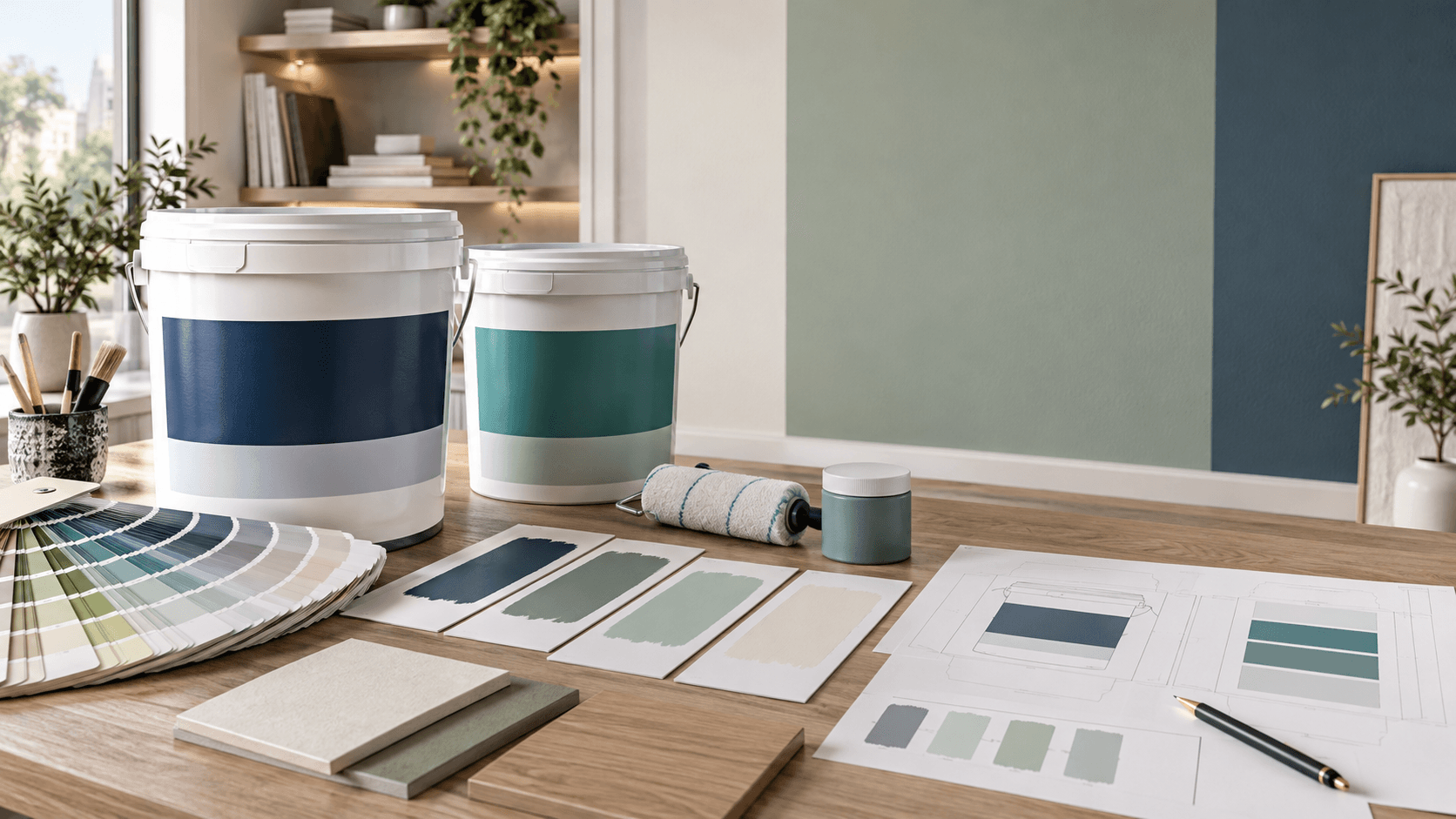
A private label wall paint order should begin with a market and performance brief, not a bucket design. Importers need to align substrate, finish, colour system, washability, local compliance, packaging and batch-approval rules before comparing quotations from latex wall paint manufacturers.
1. Define the market position and application
State whether the paint is intended for residential interiors, commercial walls, ceilings, rental refurbishment or another defined use. Include typical substrates, climate, contractor habits, target price position and expected finish. These details affect binder choice, pigment loading, application feel and packaging.
Avoid asking only for 'good quality latex paint.' Ask for a proposed grade against a measurable brief. If the range will include economy and premium tiers, give each tier a separate product code and acceptance criteria.
2. Latex paint vs washable wall paint
Latex wall paint describes a water-based architectural paint category. Washable is a performance claim, not a separate chemistry. Two water-based paints can differ significantly in scrub resistance, stain release, burnishing, sheen and film strength.
If washability is important, define the test method, number of cycles or acceptance level required for your market. Ask how colour and sheen affect the result. Marketing language should match documented evidence and local rules; do not rely on the word 'washable' alone.
3. Build a comparable paint specification
The specification should cover colour, sheen, density, solids where relevant, spreading rate under a stated method, drying and recoating conditions, recommended film build, substrate preparation and compatible primer. Also confirm storage conditions, shelf-life basis and any market-specific VOC, labelling or chemical requirements.
Coverage figures can change with surface porosity, application tool, dilution, colour contrast and film thickness. Ask the manufacturer to state the test conditions and use your own application panel to verify finish and practical coverage.
- Interior or exterior use
- Substrate and primer system
- Matt, eggshell or other sheen
- Colour tolerance and approved standard
- Coverage, drying and recoating method
- Washability or scrub-resistance evidence
4. Confirm the wall preparation system
A typical new-wall sequence is to allow the substrate to cure and dry, remove dust and contaminants, repair defects, apply compatible wall putty where needed, sand and clean, then use the specified primer or sealer before the finish coats. Existing walls may also require removal of loose paint, treatment of chalking or contamination and local repairs.
Moisture, alkalinity and weak substrates can cause failure even when the finish paint is sound. The exact sequence must follow the substrate condition, local climate and manufacturer instructions. Importers should supply a simple system guide covering putty, primer and topcoat rather than selling the topcoat in isolation.
5. Treat colour and packaging as controlled components
Choose whether colours will be factory made, tinted through a base system or limited to a practical distributor palette. Define the colour reference, approved tolerance, sheen and viewing conditions. A screen image is not a colour approval; retain a physical standard or signed panel.
For packaging, specify nominal and net content, pail size and material, lid and tamper features, handle, label or in-mould decoration, barcode, batch code, carton if used and pallet pattern. Confirm all mandatory statements for the destination market before printing.
6. Approve samples in stages
Begin with a laboratory or standard sample, then approve a labelled pack and, for higher-risk launches, a pilot or first-production batch. Apply the paint using the recommended roller or brush on representative panels and assess hiding, flow, spatter, finish, touch-up and drying under recorded conditions.
Keep the approved sample, colour panel, artwork file and specification under revision control. Agree which results will appear on the batch certificate and what happens if a batch falls outside the approved range.
7. Understand MOQ and landed cost
MOQ depends on formulation, colour, pack size, printed packaging and production scheduling. A custom pail or low-volume colour can create a higher component minimum than the paint itself. Ask for MOQ by SKU and distinguish the first order—where packaging is created—from repeat orders.
Compare landed cost using the same fill, pallet efficiency, port terms, testing, labels and documents. A lower ex-factory price can be offset by inefficient packaging, extra relabelling or incomplete export documentation.
8. Final importer checklist
A strong purchase specification connects what customers see on the label with what the factory tests. It should identify the formula or grade, approved colour and sheen, net content, packaging revision, batch checks, required documents and shipping configuration.
Before releasing the deposit, confirm the approved sample reference, production lead time, artwork proof, inspection plan, payment milestones and who is responsible for destination-market compliance.
- Signed product and colour approval
- Destination-market label review
- MOQ confirmed for every SKU
- Batch testing and retained sample agreed
- Carton, pallet and loading plan confirmed
Frequently asked questions
Is washable latex paint different from standard latex wall paint?
Washable paint is still commonly a water-based latex or emulsion paint, but it is designed and tested for better cleaning or scrub resistance. The buyer should compare a defined test method and result rather than the product name alone.
What is the correct wall preparation sequence before latex paint?
Verify the wall is cured, dry and sound; clean contaminants; repair defects; apply compatible putty if required; sand and remove dust; prime or seal as specified; then apply the required finish coats. Conditions and manufacturer instructions can change the sequence.
What affects the MOQ for private label wall paint?
Formula batch size, number of colours, pail size, printed packaging, label method and production scheduling all affect MOQ. Ask for an MOQ per SKU and a separate explanation for custom packaging components.
How should importers approve a wall-paint colour?
Use a physical colour standard or signed application panel under agreed lighting, sheen and substrate conditions. Keep that standard with the approved formula and artwork revision for production comparison.