
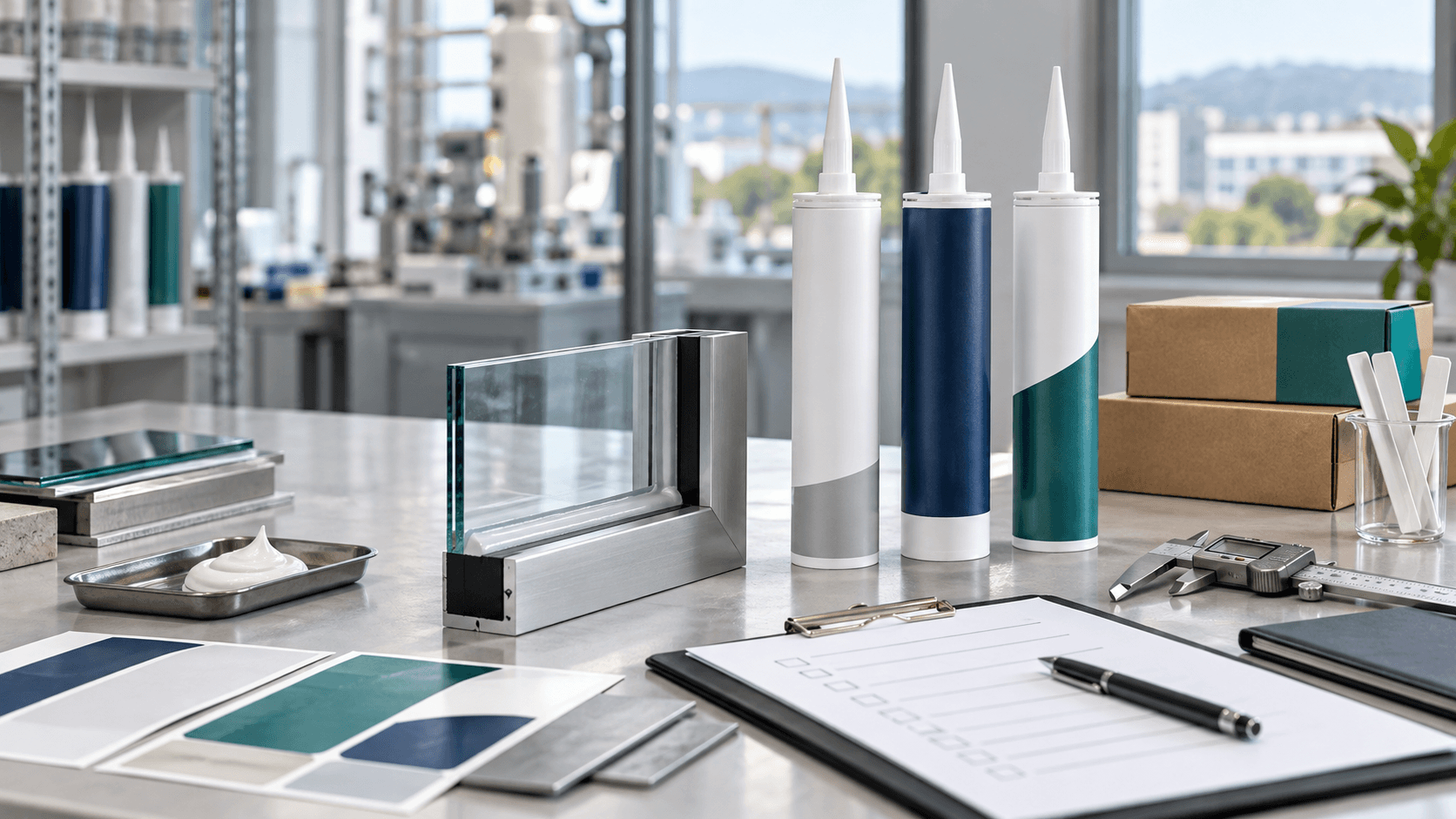
Choosing an OEM silicone sealant manufacturer is not simply a packaging decision. The reliable route is to define the joint, substrates, climate and market requirements first, then compare curing chemistry, documented performance, batch controls and private label execution against the same brief.
1. Start with the joint, not the product name
Terms such as general purpose, glazing and construction grade are useful starting points, but they do not define whether a sealant is suitable for a particular joint. A window perimeter joint, a glass-to-aluminium assembly and an interior sanitary joint can require different adhesion, movement and curing behaviour.
Give the manufacturer the exact substrates, whether surfaces are coated or porous, expected joint movement, indoor or outdoor exposure, temperature range and desired service life. Ask whether a primer or substrate test is required. This creates a comparable quotation and reduces the risk of receiving a familiar label on an unsuitable formulation.
- Joint location and dimensions
- Exact substrate and surface finish
- Indoor, outdoor and climate exposure
- Required colour and appearance
- Applicable local standards or buyer specifications
2. Acetic vs neutral silicone sealant
Acetic-cure silicone releases an acidic odour while curing and is commonly considered for compatible, non-porous materials such as glass and some ceramic surfaces. Neutral-cure silicone is generally selected where sensitive metals, coated surfaces, alkaline materials or broader construction compatibility must be considered. The correct choice still depends on the formulation and tested substrate—not the chemistry name alone.
For windows, doors, glass and aluminium, request an adhesion or compatibility check on the actual profiles, coatings and gaskets. Ask the supplier to state excluded substrates and whether staining, corrosion or plasticizer migration has been evaluated. There is no universal 'best' silicone sealant without the joint conditions.
3. Lock the technical specification before discussing price
A useful technical data sheet should identify the curing system, density, skin or tack-free time, cure rate, hardness, movement capability, tensile or elongation data where relevant, application temperature and service temperature. Test methods and conditions matter because values produced under different methods are not directly comparable.
Request a current technical data sheet and safety data sheet for the exact proposed product. If the project or market has a defined standard, include it in the enquiry and ask for supporting reports. Do not allow a catalogue claim to replace a sample evaluation or a required independent test.
4. Define the private label package as a specification
Confirm the fill size and package format—such as cartridge or foil sausage—together with cartridge material, nozzle, plunger, print method, batch coding, units per carton and pallet arrangement. Artwork must leave room for legally required product, hazard, importer and traceability information for the destination market.
Ask for a physical packaging sample or production mock-up. Check colour accuracy, readable small text, barcode scan performance, cap and nozzle fit, leakage resistance and carton strength. A good private label silicone sealant supplier treats the package as part of product quality.
5. Evaluate quality control and traceability
A supplier should be able to explain how raw materials are approved, what is checked during mixing and filling, which finished-product tests are recorded and how a batch can be traced. Useful controls may include appearance, density or viscosity, skin time, cure behaviour, adhesion checks, net content and packaging integrity, depending on the product.
Ask whether a retained sample is kept for each production batch and what document accompanies shipment. A certificate of analysis should refer to the supplied batch and agreed test items; a generic certificate is not a substitute for traceability.
6. Use samples and a pilot order to control change
Approve the formulation and the packaging separately. Test labelled samples under realistic application conditions, record the batch number and keep a signed reference sample. If local laboratory or customer approval is required, complete it before the main order.
For the first order, agree how formulation changes, raw-material substitutions and artwork revisions will be controlled. The purchase specification should identify the approved product code, colour, pack, artwork version and documents required with shipment.
- Approve a traceable product sample
- Sign off artwork and packaging components
- Agree batch tests and shipment documents
- Confirm lead time, MOQ and pallet plan
- Record how future changes require approval
7. Warning signs during supplier comparison
Be cautious when a quotation does not identify the product grade, technical documents conflict with the label, test methods are missing, or the supplier promises one formulation for every substrate. Extremely low pricing can reflect a different pack weight, specification or quality-control scope.
A professional manufacturer should ask questions before recommending a product. Clear limitations, documented options and a repeatable approval process are stronger indicators than an immediate claim that every requirement can be met.
Frequently asked questions
What is the best silicone sealant for window and door installation?
There is no single best grade. Selection depends on frame and wall substrates, coating compatibility, joint movement, weather exposure and required standards. Neutral-cure construction or glazing grades are often evaluated for sensitive metals and mixed construction materials, but the actual profiles should be tested.
What is the difference between acetic and neutral silicone sealant?
Acetic silicone uses an acid-releasing cure system and is commonly used on compatible non-porous surfaces. Neutral silicone cures without that acidic release and is generally considered for a wider range of metals and construction materials. Formulation-specific adhesion and compatibility still need confirmation.
How can an importer evaluate a silicone sealant supplier?
Compare the same written specification, current TDS and SDS documents, traceable samples, relevant test evidence, batch-control procedures, retained-sample policy, packaging capability and export documentation. Audit or third-party verification can be added according to order risk.
What information is needed for an OEM quotation?
Provide the application, substrates, target market, required standard, curing system if known, colour, pack format and size, artwork needs, quantity, destination port and desired delivery date.