
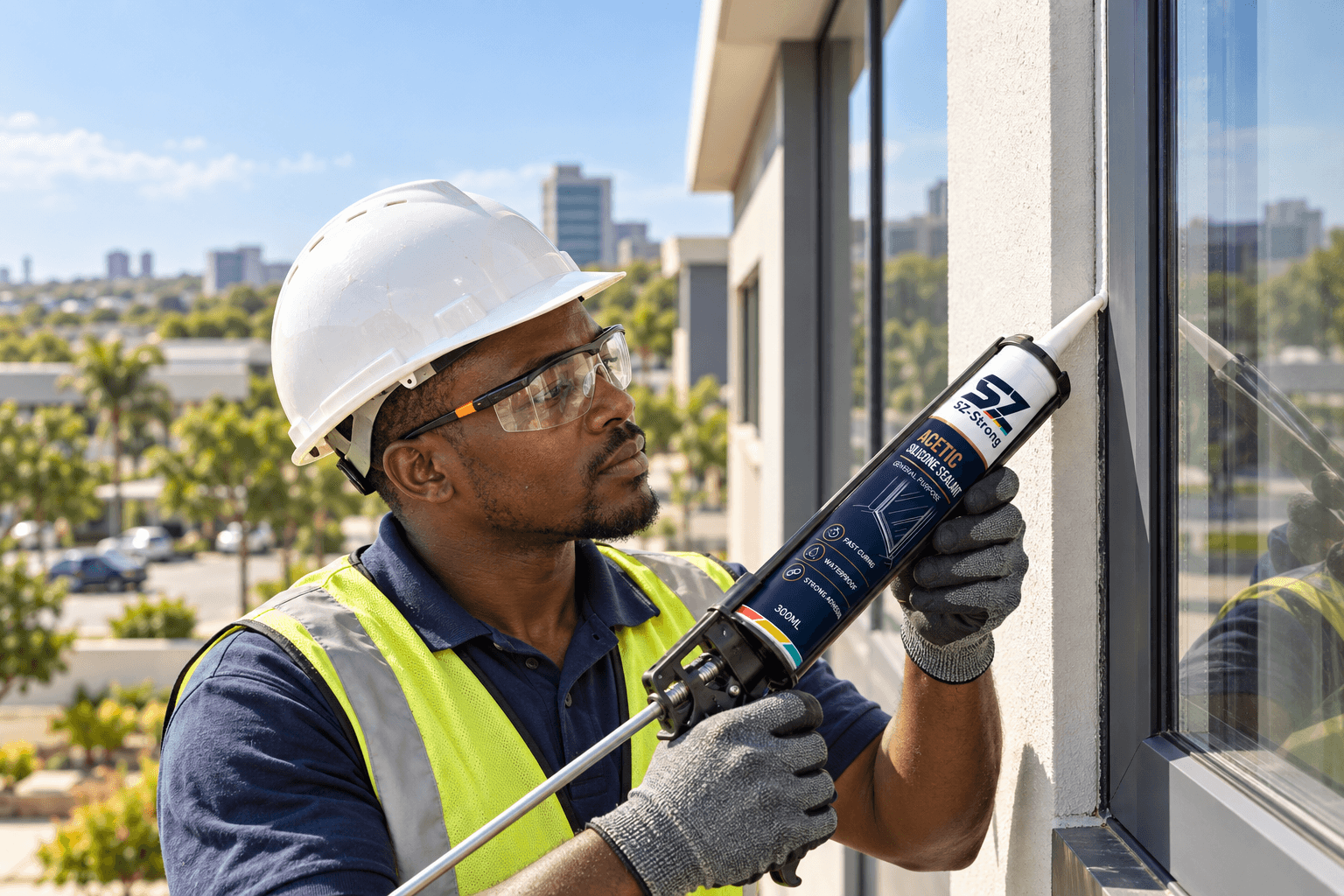
Buying glass sealant for African markets requires more than choosing a cartridge price. Importers and distributors need to match the cure chemistry to the actual glass, aluminium, coated profile and surrounding wall; consider local heat, humidity, dust and storage; then approve the formulation, packaging and batch controls against one written specification.
1. Treat Africa as many markets, not one climate
African projects can face very different conditions. Coastal locations may combine salt-laden air, high humidity and strong ultraviolet exposure. Inland hot-dry regions can add dust, large daily temperature changes and very hot storage conditions. Tropical areas may bring frequent rain and persistent humidity, while elevated cities can experience cooler nights and strong daytime sun.
A useful enquiry therefore names the destination country and city, whether the joint is interior or exterior, the orientation of the façade and the expected temperature and weather exposure. A glass sealant manufacturer or supplier can only make a relevant recommendation when these conditions are part of the brief. Avoid accepting a generic statement that one grade is suitable for every African market.
- Destination city and climate zone
- Interior or exterior exposure
- Direct sun, rain and coastal conditions
- Expected storage and transport temperatures
- Project or local-standard requirements
2. List every material in the window joint
The word glass does not describe the complete joint. A window installation may include clear or coated glass, anodized or powder-coated aluminium, painted steel, PVC profiles, rubber gaskets, concrete, render, stone and backer material. Sealant that adheres well to clean glass may behave differently on a coated profile or porous wall return.
Send the glazing sealant supplier the exact profile finish and, where possible, physical offcuts. Ask whether the proposed product requires a primer and whether it has known compatibility limits with gaskets, spacer tapes, laminated-glass edges or coated glass. The safest approval is an adhesion and compatibility trial using materials from the intended system.
3. Acetic vs neutral silicone sealant
Acetic-cure silicone releases an acidic odour during curing and is commonly considered for compatible non-porous materials such as glass and glazed ceramic. It can provide a practical general-glazing option when the surrounding materials are compatible. It should not be selected only because it cures quickly or is familiar in the local market.
Neutral-cure silicone releases non-acidic curing by-products and is generally evaluated where coated aluminium, metals, masonry or other sensitive materials are involved. However, neutral cure is not automatically suitable for every façade or structural-glazing application. Product grade, joint movement, adhesion evidence and the system designer's requirements still control the choice.
For both chemistries, request the technical data sheet for the exact quoted grade. Compare stated movement capability, hardness, cure rate, application temperature, service temperature and relevant test methods. Do not transfer claims from one product code to another simply because both cartridges say silicone sealant.
4. Separate general glazing from structural glazing
General window sealing, perimeter weather sealing, insulating-glass production and structural glazing are different applications. Structural glazing transfers specified loads and requires a designed, tested system with approved substrates, joint dimensions, quality controls and project documentation. A general-purpose glass sealant must never be assumed to be a structural-glazing product.
In the request for quotation, state whether the sealant is for shop glazing, field-applied perimeter joints, sanitary use or another defined application. If a project specification names a standard, test method or approved product list, provide it before sample approval. This protects both the importer and the installer from an incorrect substitution.
5. Check performance evidence and sample traceability
Ask for a current technical data sheet and safety data sheet carrying the same product name or code as the quotation and sample. Test values should identify the method and conditions used, because results from different methods are not directly comparable. Claims such as weather resistant, mould resistant or high movement should be supported for the exact proposed grade where they matter to the purchase decision.
Each evaluation sample should carry a batch or traceable sample reference. Apply it at the recommended bead depth and temperature, allow the stated cure time and record adhesion on every substrate. If local testing or consultant approval is required, complete it before approving the commercial order rather than relying on a catalogue image.
- Matching quotation, sample and document code
- Current TDS and SDS
- Defined test methods and conditions
- Adhesion test on actual project materials
- Retained reference sample for the first order
6. Plan for heat during storage and distribution
Cartridges may spend weeks in containers, ports, warehouses, trucks and retail stores before use. Elevated storage temperature can reduce usable shelf life or change application behaviour. Ask the supplier for the stated storage range and shelf-life basis, then compare that requirement with the likely logistics route and warehouse conditions.
Use first-in, first-out stock control and keep batch codes readable on both cartridges and cartons. Distributors serving several countries should avoid assuming that the same remaining shelf life is acceptable for every route. Agree the minimum remaining shelf life at shipment and the method for investigating leakage, curing or extrusion complaints.
7. Build the private label package around the destination
Private label silicone sealant packaging should be treated as a controlled specification. Confirm the cartridge size and material, nozzle and plunger, print method, colour, batch and date coding, units per carton, carton strength and pallet configuration. The artwork should leave enough space for product identity, directions, limitations, safety information, importer details and traceability required in the destination market.
Language needs vary across Africa. English, French, Portuguese and Arabic may be relevant, but the correct choice depends on the destination country and channel. Ask a qualified local adviser to review mandatory label and chemical information. The supplier can coordinate print and packaging, but the importer remains responsible for confirming market-specific compliance.
8. Compare suppliers with one written RFQ
Send shortlisted suppliers the same request covering application, substrates, climate, cure type, colour, performance evidence, cartridge format, artwork, quantity, destination port and required documents. This prevents a low quotation from hiding a different formula, fill size or packaging scope.
A capable window sealant manufacturer or supply partner should ask questions before making a recommendation. Evaluate document consistency, sample result, batch controls, retained-sample policy, packaging quality, lead time and export experience together with price. A pilot order can reduce risk before a wider distributor launch.
- Application and complete substrate list
- Acetic or neutral cure after compatibility review
- Colour and pack size
- Private label artwork and carton specification
- Quantity by SKU and destination port
- Sample, inspection and shipment documents
Frequently asked questions
Which silicone sealant is best for aluminium windows in African climates?
There is no universal best grade. The choice depends on the aluminium coating, surrounding wall materials, joint movement, ultraviolet and rain exposure, temperature range and project requirements. Neutral-cure weather-sealing grades are often evaluated for coated aluminium and mixed construction materials, but the actual profiles and substrates should be tested.
Is acetic silicone suitable for glass windows?
Acetic silicone is commonly used on compatible non-porous surfaces such as glass and glazed ceramic. The complete joint must still be reviewed because coated metal, stone, concrete, gaskets or laminated-glass components may require a different product or compatibility test.
What should an African distributor include in a glass sealant RFQ?
Include the destination, application, every substrate and coating, indoor or outdoor exposure, colour, cartridge size, label language, target quantity, required standards or documents and desired delivery port. Add material samples or profile details when possible.
Can glass sealant packaging be supplied under a private label?
Private label packaging can be discussed for suitable orders. Confirm the exact formulation, cartridge and nozzle, artwork languages, warnings, batch coding, carton, pallet plan, MOQ and approval process before production.
How should silicone sealant samples be tested before importing?
Use traceable samples on the actual glass, coated profiles, gaskets and wall materials. Follow the proposed preparation and bead dimensions, allow full cure, then assess adhesion, appearance, extrusion and compatibility under representative conditions. Add independent or project testing when required.